
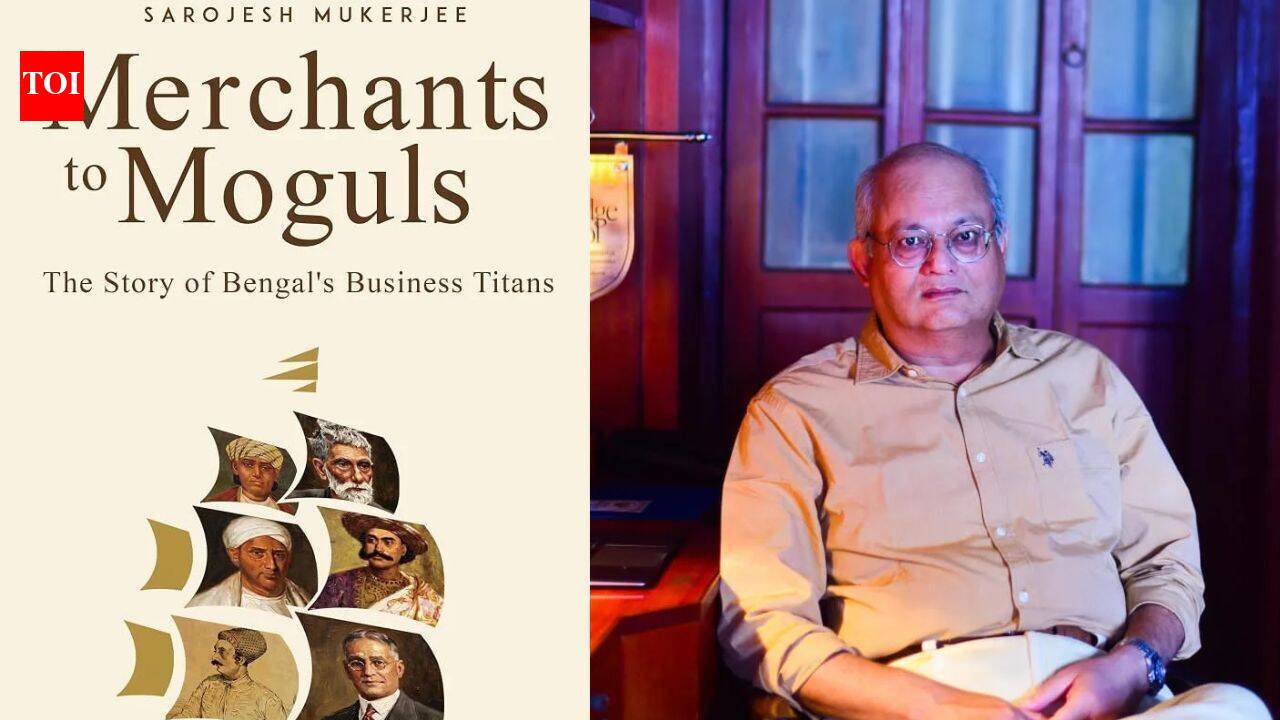
Bengal is often remembered for its poets, writers, reformers and artists. But what about the people who built businesses, established industries and helped shape India’s economic future during colonial rule? In ‘Merchants to Moguls’, Sarojesh Mukerjee brings these lesser-known stories into focus, offering readers a fresh perspective on Bengal’s contribution to business and industrial development.The book follows six remarkable figures: Ramdulal Dey, Mutty Lal Seal, Rustomji Cawasji Banaji, Dwarakanath Tagore, Prafulla Chandra Ray and Rajendra Nath Mookerjee. Their journeys span trade, shipping, banking, science, manufacturing and heavy industry. Together, they reveal how enterprise grew in a period marked by colonial restrictions, racial discrimination, uncertain markets and limited support for Indian businesses.Rather than presenting business history as a list of names, companies and fortunes, Mukerjee connects individual lives with the larger changes taking place in Bengal. His central argument is clear: the region’s industrial pioneers deserve a place in public memory alongside its better-known cultural and intellectual figures.
From difficult beginnings to bold business ventures
One of the book’s strengths is its focus on the personal struggles behind business success. Ramdulal Dey’s story is particularly striking. Born into poverty during a period of unrest, he faced hardship early in life. Yet, through hard work, sharp judgement and honesty, he rose to become a major figure in maritime trade, including commerce between India and America. His charitable work also showed that wealth could serve a purpose beyond personal comfort.Mutty Lal Seal’s journey offers another compelling example. Known for his understanding of markets and his willingness to take calculated risks, he built a successful trading business and expanded into shipping, property and insurance. His support for education, medical care and social reform adds another dimension to his story. Mukerjee shows how these entrepreneurs were not defined by profit alone, but also by the institutions and causes they chose to support.The book’s wider range is equally important. Rustomji Cawasji Banaji’s story highlights the role of a Parsi entrepreneur in Calcutta’s commercial and civic life. Dwarakanath Tagore emerges as an ambitious businessman who ventured into coal, shipping, banking and other industries, while also engaging with social reform. By including Prafulla Chandra Ray and Rajendra Nath Mookerjee, the book broadens its view of enterprise beyond conventional trading, bringing science, manufacturing and industrial development into the discussion.
More than stories of wealth
What makes Merchants to Moguls engaging is its attention to the conditions in which these figures worked. Mukerjee places their achievements against a colonial economy that often favoured British interests and made it difficult for Indian entrepreneurs to compete on equal terms. He also explores the risks they faced, from business failures to financial crises, showing that these were not effortless journeys to success.The book’s discussion of philanthropy is another valuable element. Donations to schools, hospitals, public institutions and people in need appear not as minor details but as an important part of these entrepreneurs’ legacies. This gives the narrative a human dimension and raises a relevant question for modern readers: what should business success mean beyond wealth creation? At times, the detailed business history and financial explanations may feel dense to readers unfamiliar with economic terms or colonial trade. However, the individual stories help make the wider arguments accessible, and the range of examples keeps the book from becoming a purely academic account.
About the author
Sarojesh Mukerjee is the founder of The Cambridge School, where he has taught advanced economics since the institution’s inception. His interest in Calcutta’s colonial history informs his work on the people and events that shaped the region. His first book, ‘The Life & Times of David Hare: First Secular Educationist of India’, received critical acclaim in 2024. Merchants to Moguls is his second historical work and explores the lives of six prominent Bengali industrialists from the eighteenth to the twentieth centuries, examining their challenges, innovations, successes and occasional failures. His third book, ‘In Justice or Injustice: Early Law Trials at Calcutta’, is expected to be published in 2027.
A timely reminder of Bengal’s entrepreneurial past
Merchants to Moguls is a useful addition to the history of Indian business. It challenges the narrow idea that Bengal’s achievements lie mainly in literature and the arts and restores attention to people who helped build commercial networks, institutions and industries under difficult circumstances. The book will appeal to readers interested in Bengal, colonial history, entrepreneurship and the relationship between business and social responsibility. More importantly, it invites a younger generation to look beyond familiar historical names and discover a different side of the region’s past.Mukerjee’s message is not simply that Bengal once produced wealthy merchants. It is that ambition, innovation, resilience and public service have long been part of its business story. By bringing these lives back into view, Merchants to Moguls makes a strong case for remembering the people who helped build Bengal’s economic legacy.
Source link
Auto GoogleTranslater News