
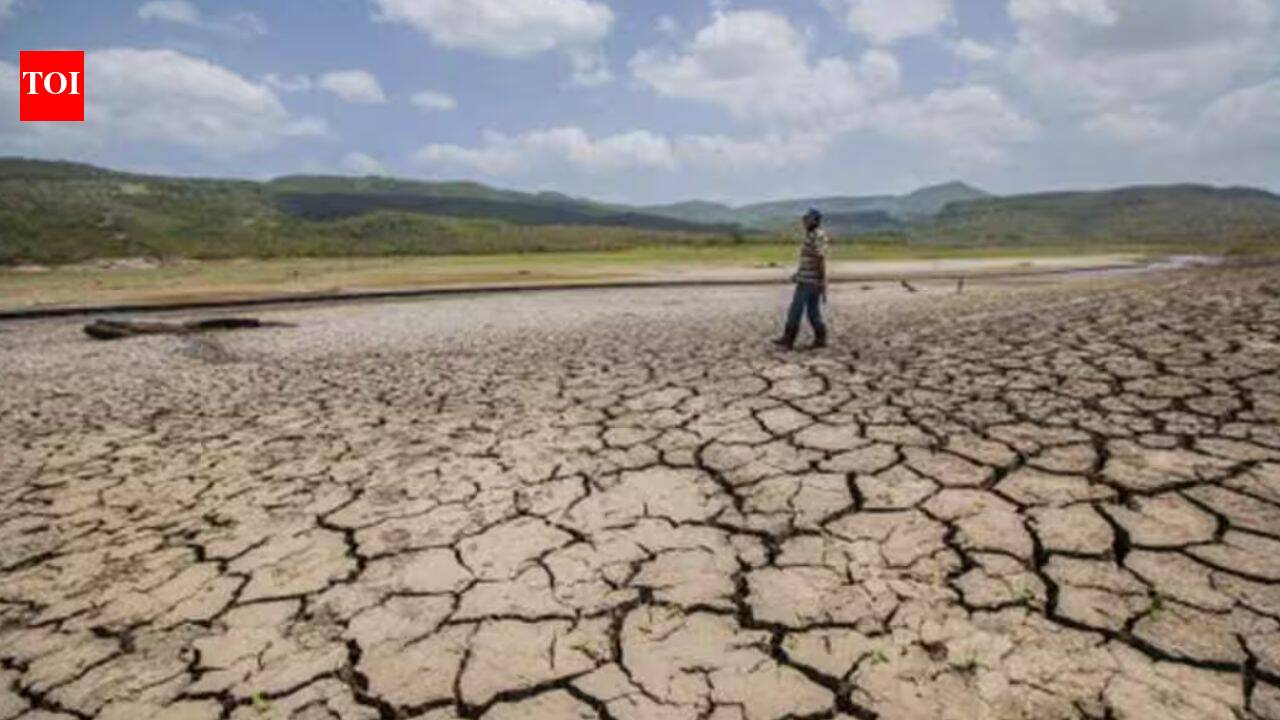
MUMBAI: The state government on Saturday declared drought in 265 of its 358 talukas, covering nearly three-fourths of the state, after deficient monsoon rainfall and prolonged dry spells affected crops during the 2026 kharif season.The declaration has set in motion an immediate crop-loss assessment and district-level drought response plan, with collectors directed to begin panchnamas and document damage through GPS-enabled photographs. The government will decide crop-loss assistance separately after the assessment is completed.The declaration was made under the Drought Management Code, 2016, after the Agriculture Commissioner reported drought-like conditions in the 265 talukas from June onwards based on rainfall deficiency and other factors. Trigger-1, which includes a continuous dry spell of at least 21 days without significant rainfall during the monsoon, has been activated in these areas.Collectors have been asked to begin field assessments immediately and prepare consolidated crop-loss reports for submission to the government through the Agriculture Commissioner. “The reports will record the extent and nature of crop damage and be supported by photographs carrying GPS coordinates,”said senior revenue officials. Officials said that the assessment will be followed by separate decisions on financial assistance.Officials said that GR does not at present cover the amount of compensation to be paid to farmers. “The government’s relief measures are intended to address both the immediate impact on crops and the wider scarcity situation in the affected talukas. The extent of crop-loss assistance will be determined after completion of the field assessment,”added the official.The GR mentions that at the district level, collectors will also have to draw up plans covering drinking water, livestock water, fodder, foodgrain supply, farm power and employment in the affected areas. The administration will have to identify villages facing drinking-water shortages and arrange tankers wherever required. It will also have to assess fodder requirements and ensure availability for livestock. In villages declared scarcity-hit, power connections to agricultural pumps cannot be disconnected. Revenue officials explained that collectors will also have to oversee implementation of the relief measures covering waiver of land revenue, restructuring of agricultural loans and an immediate stay on recovery of agriculture-related loans.The government has extended a concession on current electricity bills for agricultural pumps above 7.5 HP, while consumption up to 7.5 HP has already been waived. Examination fees for school and college students in affected areas have also been waived.The administration has been directed to undertake water-conservation works and facilitate additional works under the Rural Employment Guarantee Scheme to generate employment in drought-hit areas.According to the GR, the Chhatrapati Sambhajinagar division has the highest number of affected talukas at 74, followed by Amravati division with 56, Nashik with 49, Nagpur with 39, Pune with 35 and Konkan with 12.boxChhatrapati Sambhajinagar division, the affected talukas are spread across all eight districts — Chhatrapati Sambhajinagar (9), Jalna (8), Beed (11), Latur (10), Dharashiv (8), Nanded (14), Parbhani (9) and Hingoli (5).The Amravati division has 56 affected talukas — Buldhana (13), Amravati (14), Akola (7), Washim (6) and Yavatmal (16). Nagpur division accounts for 39 — Wardha (7), Nagpur (14), Bhandara (3), Gondia (1), Chandrapur (12) and Gadchiroli (2).In Nashik division, 49 talukas have been covered — Nashik (10), Dhule (4), Jalgaon (15), Nandurbar (6) and Ahilyanagar (14).Pune division has 35 affected talukas — Pune (8), Solapur (11), Sangli (4), Satara (6) and Kolhapur (6). Konkan has 12 — Ratnagiri (3), Sindhudurg (8) and Raigad (1).
Source link
Auto GoogleTranslater News