
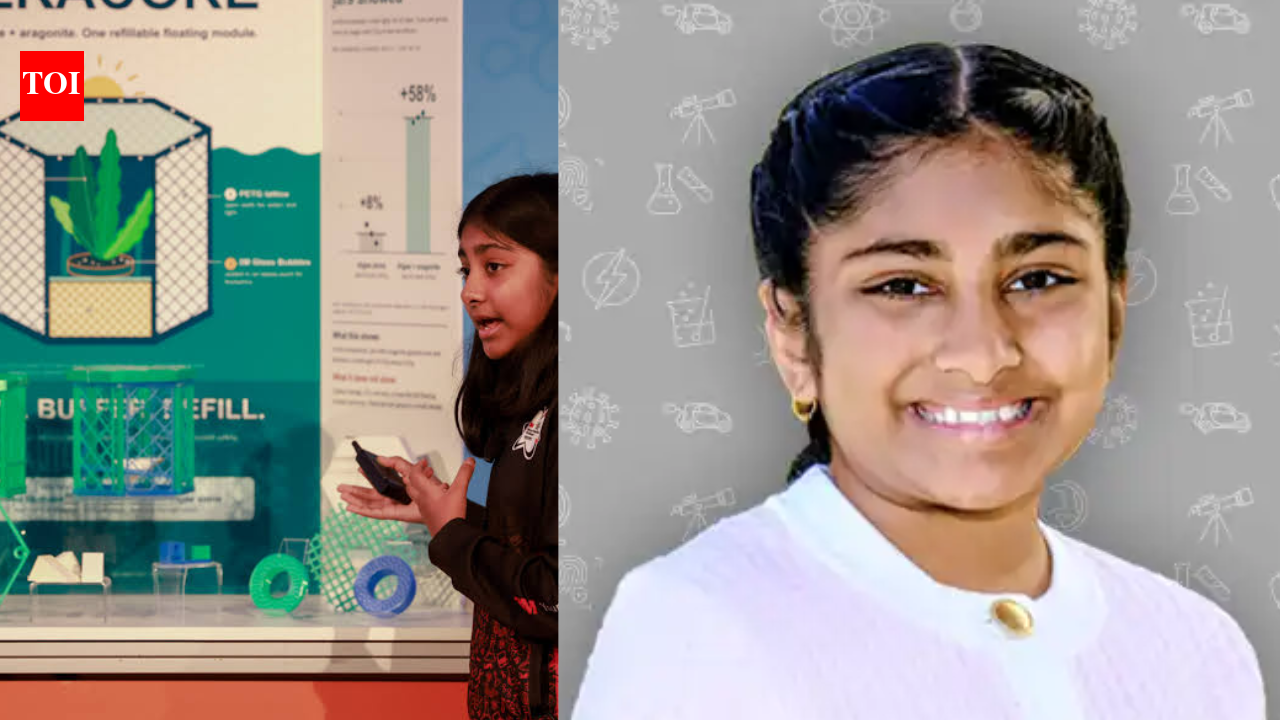
Ocean acidification rarely makes headlines the way storms or heatwaves do, yet it quietly changes the chemistry that coral, shellfish and other sea creatures rely on. One twelve-year-old from Connecticut has decided to take it on. Raji Doshi, a seventh-grade student at Talcott Mountain Academy, designed a coastal solution that pairs algae with natural calcium buffers, and it earned her a place among the ten national finalists of the 2026 3M Young Scientist Challenge. This article explains how her idea works, why she created it, which invention she admires most, and what she hopes to build in the future.
How a durable algae and aragonite alkalinity system aims to lower ocean acidity and protect sea life
According to Raji’s finalist profile on the 3M Young Scientist Lab, she created an innovative coastal solution that uses algae and natural calcium buffers to lower ocean acidity and boost marine health. Her project title describes it as a novel, durable algae and aragonite alkalinity system designed to reduce ocean acidification driven by carbon dioxide. Aragonite is a form of calcium carbonate, the mineral that many shell-building marine animals depend on, so the approach targets the chemistry of seawater directly. Talcott Mountain Science Centre reports that a closely matching version of the project won first place in physical sciences for seventh-grade individual entries at the Connecticut Science and Engineering Fair in March 2026, along with an invitation to compete in the Thermo Fisher Scientific Junior Innovators Challenge.
Why Raji Doshi entered the 3M Young Scientist Challenge to test her ocean acidification research
Raji told the 3M Young Scientist Lab that she entered the challenge because she wanted to do something real with her research. She explained that studying ocean acidification in a classroom is one thing, but the competition gave her a reason to design an experiment, collect real data and test whether her idea could withstand scrutiny. She also told the Lab that climate change feels urgent to her because oceans are absorbing carbon at a rate that is changing their chemistry in ways that affect billions of people. The challenge appealed to her, she said, because it rewards students who communicate science clearly and think about real-world impact, which is exactly what she tried to do. She wanted to work on something that mattered rather than something that would simply earn a grade.
Autonomous underwater vehicles , Raji Doshi’s favourite invention, and what they teach us about oceans
Asked by the 3M Young Scientist Lab to name her favourite invention of the past one hundred years, Raji chose the autonomous underwater vehicle, pointing to systems developed by organisations such as Saildrone and the Woods Hole Oceanographic Institution. She told the Lab that these vehicles, including carbon-neutral ocean drones from Saildrone, let scientists gather real-time data on ocean chemistry, acidity levels and carbon dioxide absorption in remote and challenging environments. That information is critical, she said, for understanding and addressing ocean acidification. She added that their ability to operate on their own for months at a time makes them game-changers for monitoring the health of the oceans. The choice mirrors the emphasis she placed on collecting real data in her own research, and it shows how she connects technology, measurement and conservation.
Image: Canva
From seventh grade researcher to future aerospace engineer: Raji Doshi on climate goals and teamwork
Looking ahead, Raji told the 3M Young Scientist Lab that in fifteen years she hopes to be a National Aeronautics and Space Administration aerospace engineer designing systems that monitor ocean health and climate change from space. That ambition links her work on seawater chemistry to observation from orbit. She said her research taught her that the most significant climate breakthroughs happen when different fields work together, and she wants to build the tools that make that collaboration possible. Her profile on the Lab website also features her personal motto, i.e., “Work hard in silence, let your success make the noise.” The same page introduces her mentor, Deborah Isabelle, a product engineering specialist in abrasives who develops new products in the 3M Automotive Aftermarket Division and chairs the company’s Science Encouragement Program.
How Raji Doshi won the America’s Top Young Scientist title at the 3M Young Scientist Challenge final
As reported by USA Today, Doshi was announced the winner during the award ceremony; she will receive the grand prize of $25,000, a contest trophy, and the title of “America’s Top Young Scientist 2026,” according to 3M’s website. The ten finalists, aged eleven to fourteen, spent the summer with 3M scientist mentors before gathering at the 3M Innovation Centre in Saint Paul, Minnesota, for live challenges and final presentations to judges. William Brown, chairman and chief executive officer of 3M, told the public in the release that the challenge turns student curiosity, scientific thinking and mentorship into real solutions, while Brian Shaw, chief executive officer of Discovery Education, said the finalists prove you can be a scientist at any age.
Source link
Auto GoogleTranslater News