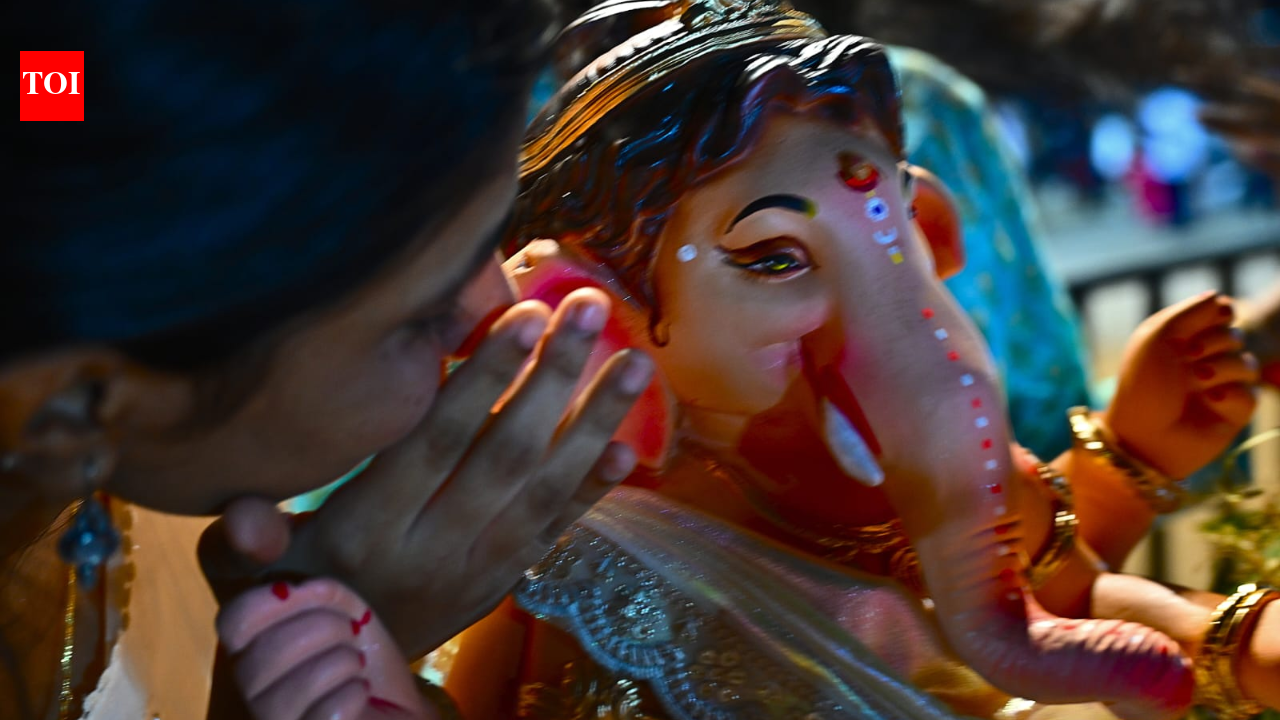
PUNE: “Mi majhya Bappala sodnar nahi… majha Bappa mala saglyat jasti avadto (I will not leave my Bappa; I really like him),” a five-year-old girl tells her parents, clutching her little Ganpati idol tightly to her chest.Her parents try to explain that Bappa has to go now and will return next year. But she refuses to let go. Her eyes fill with tears as the Ganpati visarjan procession moves closer.A policeman on duty notices her.He bends down, speaks gently to her and tries to console her. “Bappa pudchya varshi parat yeil (Bappa will surely return the following year),” he tells her.For the little girl, it is a difficult goodbye. For the policeman, it is one of many such moments he will encounter on Pune’s streets as the city prepares for the Ganpati visarjan.Thousands will take to the streets, chanting, dancing and bidding an emotional farewell to Bappa. Police personnel, meanwhile, will spend the day managing crowds, regulating traffic, helping lost children find their families and responding to emergencies.And as one policeman helps a child say goodbye to her beloved Bappa, his own child may be waiting for him at home.For police and emergency personnel, festivals often mean long hours on duty while their families celebrate without them. Their children may wait for them to return, their families may eat the festive meal without them, and celebrations at home may have to wait.Yet on the streets, they remain where they are needed, making sure that thousands of other families can celebrate safely.Because while Pune says goodbye to Bappa, those in uniform quietly put their own celebrations aside.For them, duty comes first, even on a day when every family wants to be together.
From Tilak’s public festival to Pune’s visarjan tradition
Pune’s association with Ganeshotsav goes back centuries, with the festival gaining a new public and nationalist character during the freedom movement under Bal Gangadhar Tilak.Pune’s Bhau Saheb Rangari Ganpati is widely regarded as the first sarvajanik Ganeshotsav, and the festival has since become deeply woven into the city’s cultural identity.
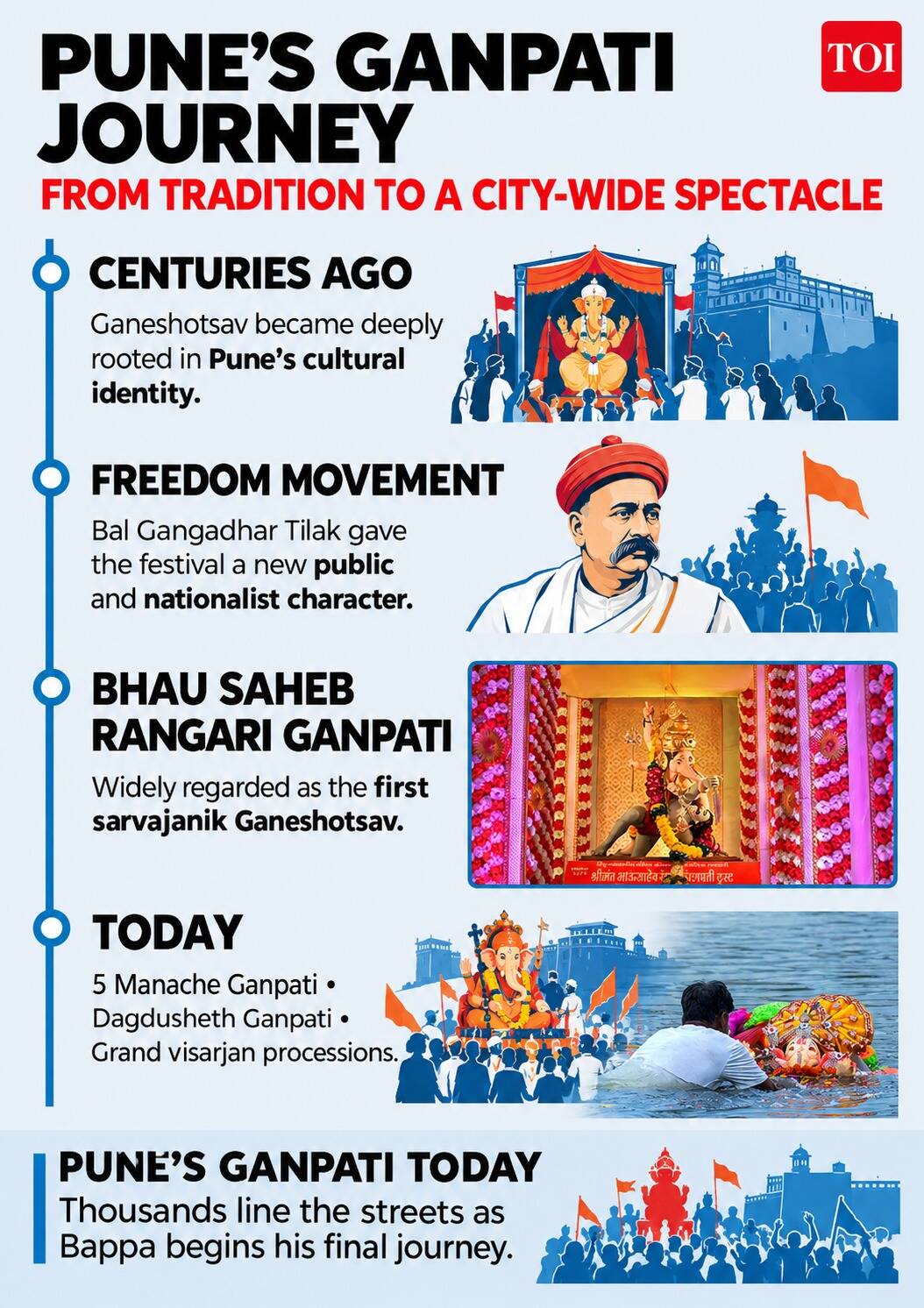
From Tilak’s public Ganeshotsav to Pune’s grand Visarjan processions, a look at how the city’s Ganpati tradition evolved over the years.
Today, Pune’s Ganpati celebrations are defined by the five Manache Ganpati, Shreemant Dagdusheth Halwai Ganpati, grand visarjan processions and the thousands who line the city’s streets to watch the idols make their final journey.From Laxmi Road to Alka Chowk, dhol-tasha pathaks and chants of “Morya Re Bappa Morya Re” turn the city into one giant celebration.But behind the spectacle is another story, one that unfolds largely away from the cameras.
3,500 cameras, 10,000 personnel, and a city ready to move
Every year, as thousands take to the streets for visarjan, a vast network of police personnel, traffic cops, fire brigade teams, civic workers and other agencies work through the day and night to keep the celebrations safe and orderly.They are the people behind the curtain: clearing a route for a procession, responding to an emergency or keeping traffic moving, even as their own families wait for them at home.Pune Police will monitor the immersion processions through a centralised system at Shivajinagar headquarters and a dedicated war room at Faraskhana police station.Around 3,500 CCTV cameras with AI-based analytics, drones and surveillance vehicles will track crowds, suspicious activity and incidents, while GPS devices will help monitor Ganpati processions in real time.
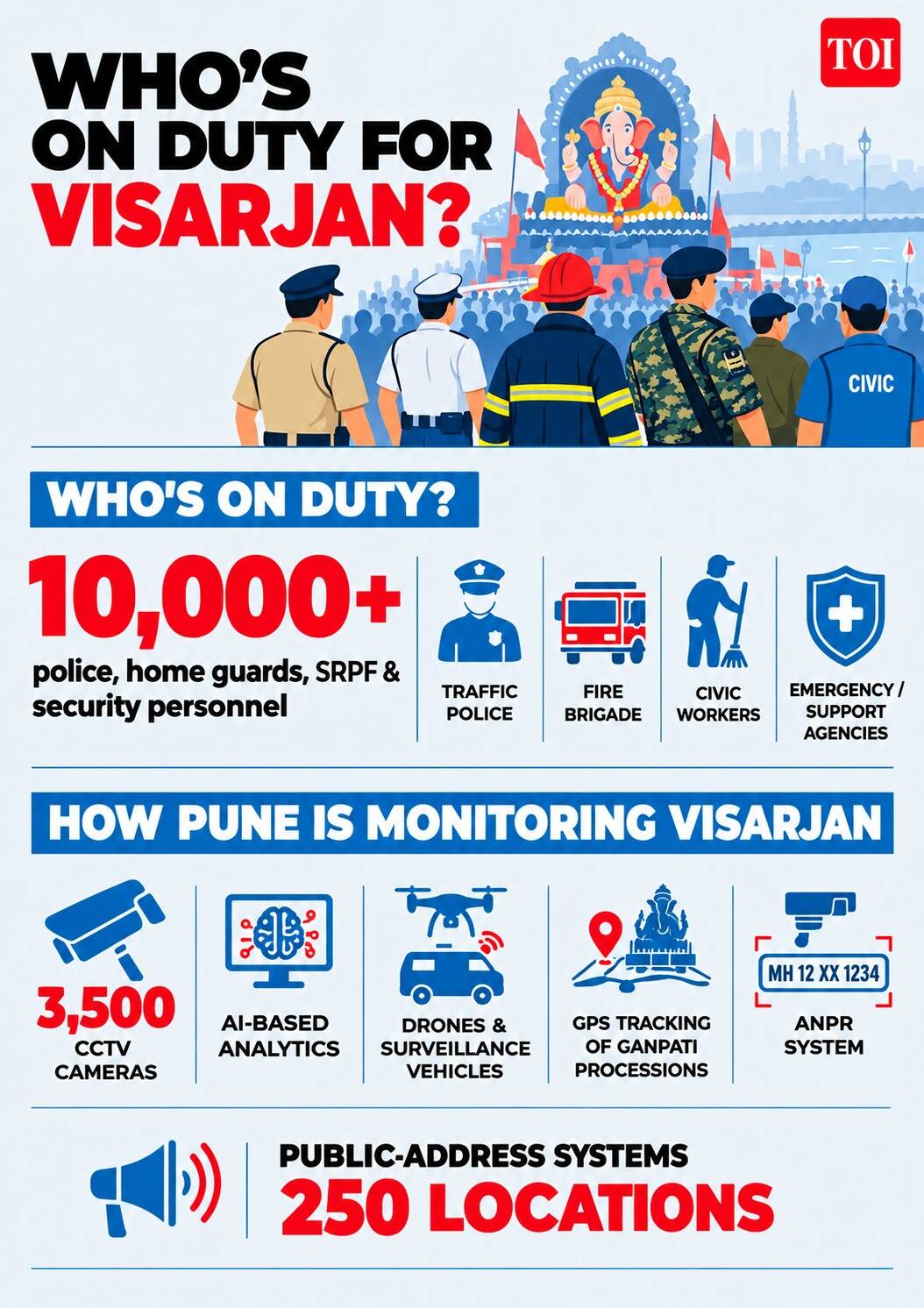
From 10,000+ personnel on duty to 3,500 CCTV cameras, Pune has deployed manpower and technology to keep Visarjan safe and orderly.
An ANPR system will detect traffic violations, and public-address systems at 250 locations will be used for crowd management and emergency announcements.More than 10,000 police, home guards, SRPF personnel and other security staff will be deployed for bandobast duty.Along with this, Traffic police have closed some major roads to traffic, including Laxmi Road, Chhatrapati Shivaji Road and Bajirao Road, from 5pm onwards.With elaborate arrangements in place, Pune is all set to bid goodbye to Bappa this year.But behind the elaborate arrangements is a quieter question: what does it take to remain devoted to duty when it means missing time with your own family?
When Ganpati calls, family has to wait
Sunil Jaitapurkar, assistant commissioner of police (ACP), Zone 4, Yerwada division of Pune, said the police force has made a commitment to society to ensure that people remain safe and secure, with duty taking precedence above all else.He said service is always a first priority for them and they surely cannot compromise on that.“Family time is always secondary when you are handling public events, particularly the biggest festival of Maharashtra. One has to sacrifice family time and family celebrations to make sure that the public experiences a safe and secure procession,” he said.“One needs to have a very clear mind when serving the country. We cannot afford to think emotionally when thousands of people look at us with hope and trust,” the ACP added.For these officials, one mantra is clear: people can celebrate with their families because they are out doing their duty. But what would happen if police officials chose to celebrate festivals with their own families? For Ganesh More, a retired ACP from Pune’s Daund division, this sense of responsibility became a defining part of his career and kept him committed to the police force until retirement.He said serving officers mostly do not have a choice when it comes to deployment.“One has to sacrifice the idea of ‘family time’ when serving the nation. We always knew what we were getting ourselves into. Family time and enjoying a festival with our families are privileges that we surely crave most of the time.”
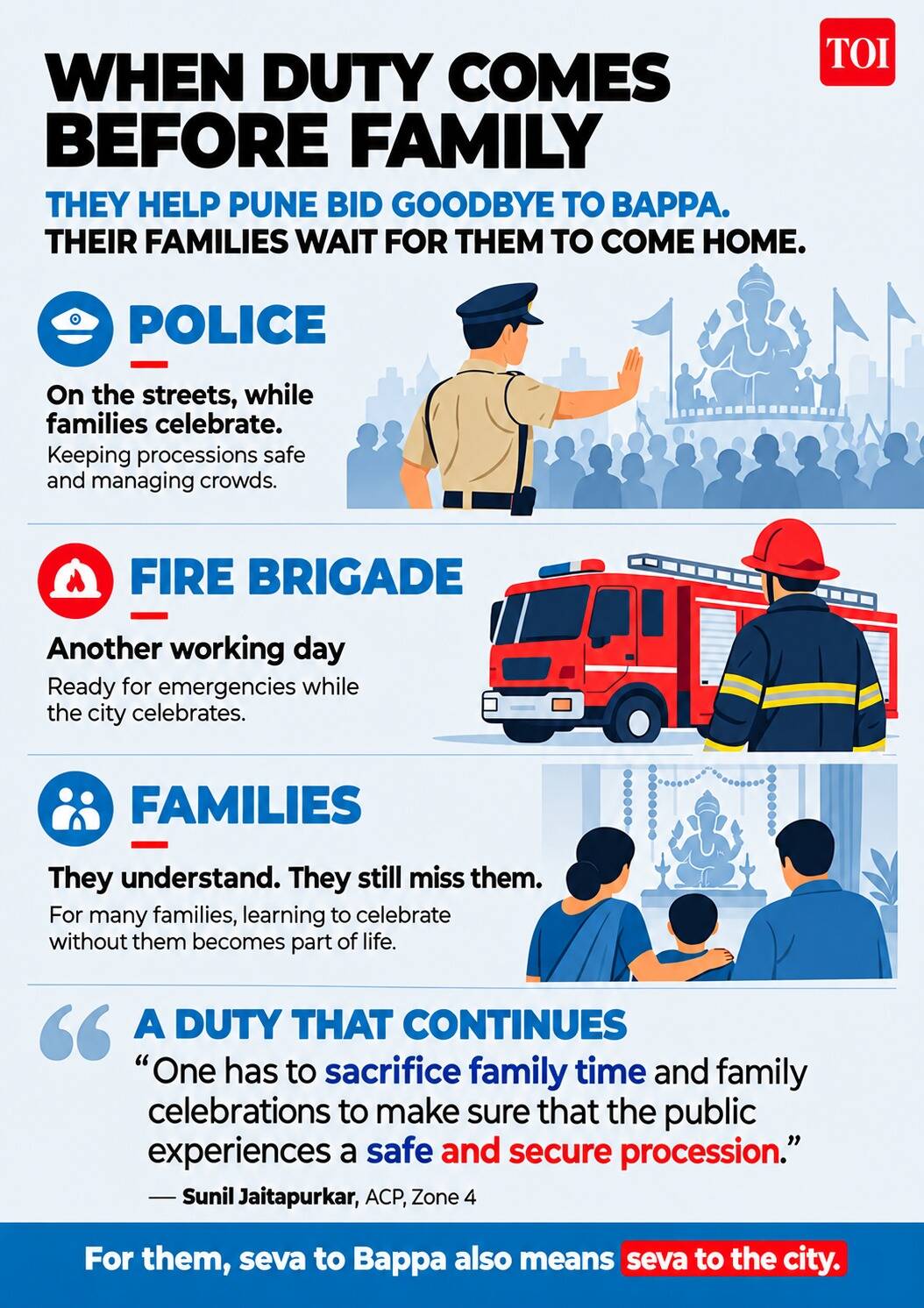
While Pune celebrates Ganpati Visarjan, police, fire brigade personnel , etc remain on duty, putting family celebrations aside to keep the city safe
For families of police personnel, learning to celebrate without them often becomes part of life.Madhu More, wife of Ganesh More, said the family gradually gets accustomed to the fact that “they won’t be here for celebrations.”Yet, she said, she always admired her husband’s commitment to the uniform.“I always admired him for his loyalty towards his duty, his passion. Till the time he retired, he made sure to follow his duty with grace. Even after retirement, he and his batchmates meet every Wednesday to plan and do something,” Madhu said with a soft laugh.But a life devoted to duty also left behind some bittersweet memories, moments when the family needed him, but his duty came first.“It was on Visarjan day that I went into labour during my second delivery. I really wanted him to be beside me, but he just couldn’t make it,” she said.For the public, however, the presence of these personnel is also a source of reassurance during the festival.With people from across India travelling to Pune for Ganpati, police officers often become the first point of contact for visitors looking for directions, assistance or even basic information.Nilesh Mahajan, a fire officer who has been serving the city for more than 20 years, said with a faint smile that his family has now grown accustomed to his demanding schedule.“Our main goal has always been to ensure that the celebrations do not face any mishap. There is a lot of planning that goes into it, and my team and I are always ready on the ground to provide assistance,” Mahajan said.For personnel like Mahajan, public holidays often mean another day at work. But he and his colleagues have come to take pride in that responsibility.For Mahajan, the commitment to public service is also a family legacy. His father served in the fire brigade for 32 years, and Mahajan said he knew from the beginning what the profession would demand of him.“My family feels very proud that we serve the public,” he said.
A procession that runs for hours
Thousands will gather in the lanes of Budhwar Peth to witness Pune’s famous visarjan celebrations, the dhol-tasha pathaks, the processions and the spectacle that draws people from across the city.But making a celebration of this scale move so seamlessly requires more than just elaborate planning. It requires people willing to spend hours in uniform, away from their own families, while helping everyone else experience the festival.For these personnel, the celebration is experienced differently. They watch Bappa’s farewell not from within the crowd as devotees, but from behind the scenes, managing the very crowds that have come to witness it.
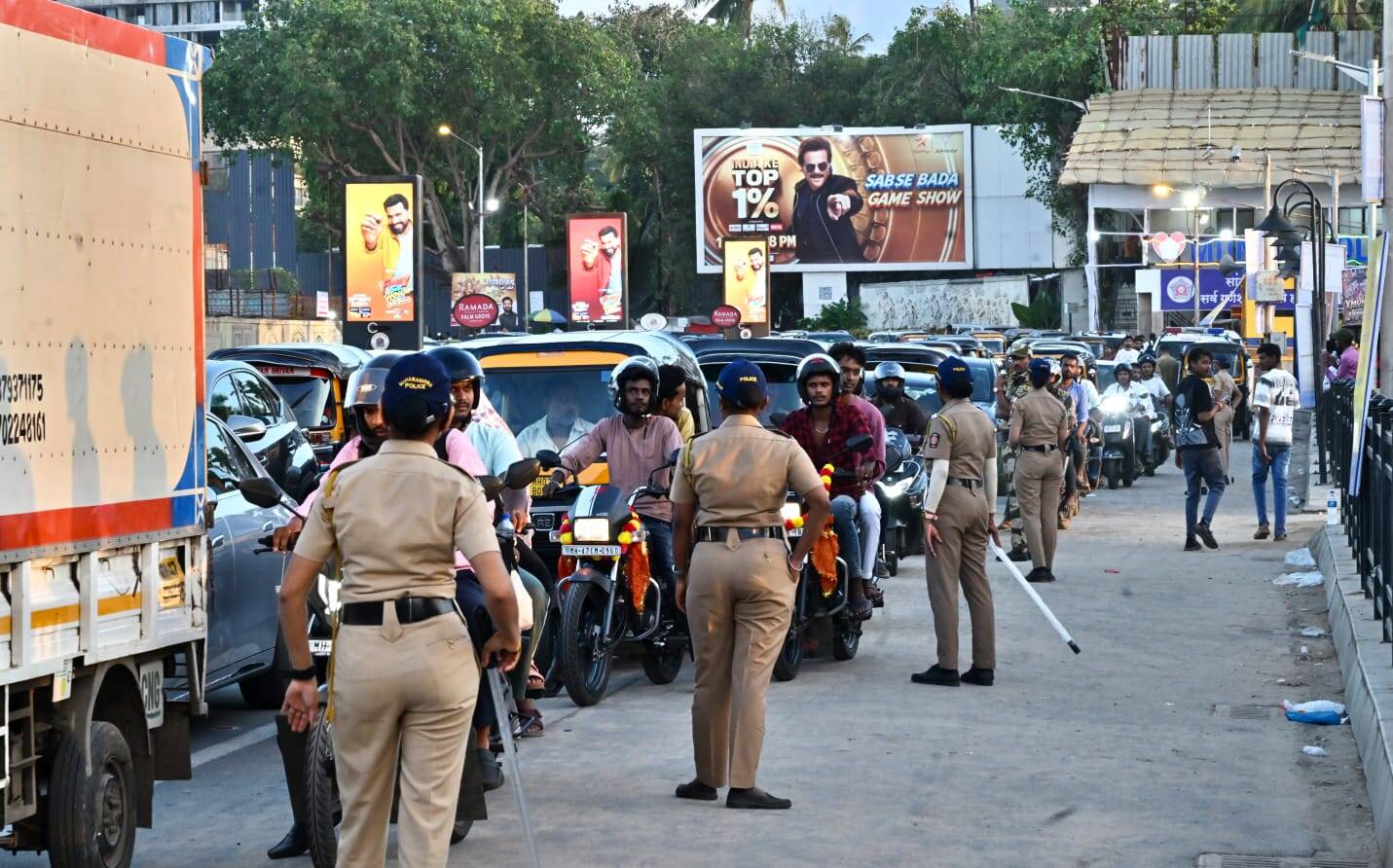
Police personnel manage traffic and crowds ahead of Ganpati Visarjan celebrations (Representative image, credit: Uma Kadam)
In a way, they celebrate Bappa alongside thousands of strangers, while their own families now celebrate mostly without them.Varad Tornekar, a member of a dhol-tasha pathak, said being part of the procession gave him a firsthand view of both its energy and its challenges.“As a performer, I have personally experienced the energy and challenges of the festival. Performing in crowded streets has taught me discipline, teamwork and awareness of the people around me. Seeing everyone work together to ensure safety makes the experience truly memorable,” he said.He said the smooth movement of such large processions also depends on the presence of police, ambulances, medical teams, fire brigade personnel and volunteers who remain alert throughout the celebrations.For Punekars, the scale of the procession also comes with a sense of familiarity with how the city manages the crowds. One of the most admired aspects is the cooperation among participants, with people often making way for smaller private Ganpatis even during larger processions.Dipti Kulkarni, a resident of Dahanukar Colony, Kothrud, said, “One thing I truly appreciate about Pune’s Visarjan celebrations is how well organized they are.”“On more than one occasion, ambulances have been given a clear path through the procession, showing the discipline and cooperation of both organizers and participants,” she added.Dipti said the spirit of inclusiveness and cooperation among participants is what makes Pune’s visarjan celebrations stand out.Another resident, Mubarak Ansari, an entrepreneur and senior journalist, said the real challenge of Pune’s Visarjan Miravnuk lies in managing its sheer scale.“When you see such a huge procession moving through the city for hours, involving thousands of devotees, vehicles, crowds and multiple sensitive points, maintaining law and order is a tremendous responsibility. Yet, year after year, the procession has been managed without any major mishap,” he said.“For me, the real success of Pune’s Visarjan Miravnuk is not just the scale of the celebration, but the fact that such a massive public gathering can be conducted with discipline, coordination and safety,” he added.
The last procession passes. Their duty may not be over
Pune has witnessed the grandeur of Ganpati celebrations for generations. For many young Punekars, watching the visarjan procession, following the dhol-tasha pathaks and soaking in the infectious energy has become an annual tradition.But for those in uniform, the celebration comes with a different responsibility. Their place is often not in the crowd, but beside it, keeping the roads moving, responding to emergencies and making sure thousands can experience Bappa’s farewell safely.Perhaps that is what makes their journey through the festival so remarkable. The promise they made when they first put on the uniform, to serve, protect and respond when their city needs them, continues even when duty means missing moments with their own families.And as Pune chants “Ganpati Bappa Morya, Pudhchya Varshi Lavkar Ya!”, they will remain on the streets, watching Bappa leave with everyone else, before eventually heading home to their own families.Because for them, too, this is a celebration of Bappa. Just one where duty becomes their way of offering seva.
Source link
Auto GoogleTranslater News