
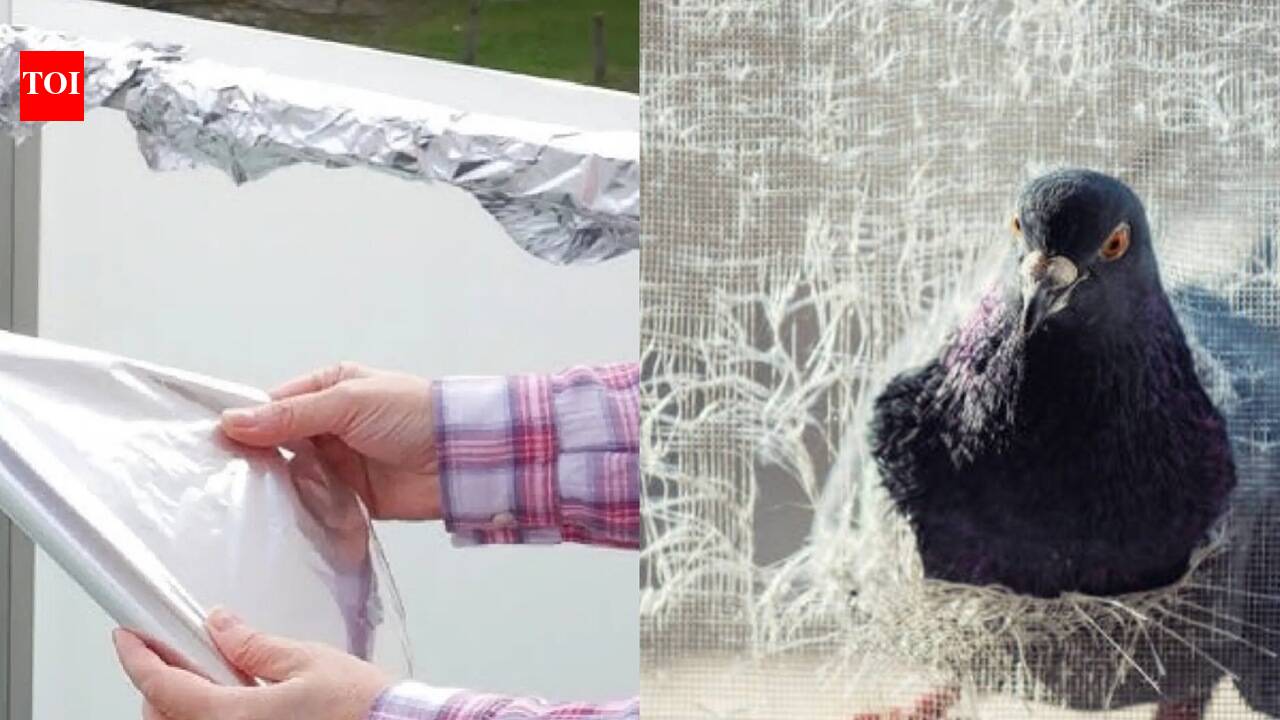
Somewhere between waking up to yet another mess on your balcony railing and scrolling past a viral video of someone lining theirs with kitchen foil, a genuinely odd question starts to feel worth asking: could something this simple actually work? As pigeons flock to shaded balconies and windowsills across Indian cities to escape the summer heat, leaving behind droppings, feathers, and the occasional half-built nest, more and more people are reaching for a roll of aluminium foil instead of calling in pest control. It’s cheap, it’s already sitting in most kitchens, and social media is full of before-and-after clips claiming it clears a balcony in days. But does the science, or even the anecdotal evidence, actually back that up? Here’s a proper look at what’s behind the hack, and what it can and can’t realistically do.
Why this particular hack took off
The appeal is obvious enough: it costs next to nothing, takes minutes to set up, and doesn’t involve any chemicals or professional pest control. Videos demonstrating the technique have spread widely across social media, with users showing balconies that had been under constant pigeon siege suddenly clear for days after a simple foil application. For Indian city-dwellers dealing with pigeons drawn to shaded ledges during peak summer heat, a free, kitchen-cupboard solution understandably has real appeal over hiring someone or investing in specialised bird-deterrent equipment.
The actual reasoning behind why it might work
The theory rests on a few things pigeons are known to dislike. Aluminium foil’s reflective surface throws off sudden flashes and glare when it catches sunlight, which is genuinely disorienting for birds that rely heavily on vision. Beyond the light, the foil’s crinkling sound and unstable, shifting texture underfoot make it an uncomfortable, unreliable surface to land or perch on, unlike the solid stability pigeons generally look for on a railing or ledge. Combined, the light, sound, and texture add up to a spot pigeons would rather avoid than settle into.
How people are actually setting it up
The method itself is simple: cut strips of foil wide and long enough to catch a breeze, and lay or loosely secure them along railings, ledges, or windowsills where pigeons typically land. The movement matters as much as the material itself, since a breeze-driven flutter creates unpredictable flashes of light rather than a single static glare, which is generally considered more effective at keeping birds unsettled. Positioning the foil where it gets consistent direct sunlight through the day also makes a real difference to how well it performs.
Where the hack genuinely falls short
This is the part most viral videos gloss over. The technique depends heavily on sunlight, a shaded balcony or a north-facing window with little direct light simply won’t produce the same glare effect, making the hack considerably less useful in exactly the spots pigeons often prefer. There’s also the habituation problem: birds can grow accustomed to a static deterrent over time, which is why the foil needs repositioning or replacing every few days rather than being set up once and forgotten. And there’s no getting around it, foil-lined railings aren’t exactly a design win for your balcony’s aesthetics.
What the evidence actually says
It’s worth being upfront that there’s no dedicated scientific study confirming aluminium foil specifically as a guaranteed pigeon deterrent, most of what’s out there is anecdotal, shared by users who’ve tried it themselves. That said, the underlying mechanism isn’t invented out of thin air either, broader research into urban bird behaviour has found that reflective materials genuinely reduce perching and feeding activity in city bird populations, which lends some real credibility to why foil seems to work for so many people, even without a study built around foil specifically.
Getting more out of the hack
For better results, pair the foil with a few other basics: remove any obvious food or water sources first, since that’s usually the actual reason pigeons keep returning to a particular spot in the first place, and combine the foil with hanging strips or old CDs that move independently for a stronger, less static visual disturbance. If pigeons have already been nesting on your balcony for a while, foil alone may only offer partial relief, and pairing it with netting or spikes tends to produce more reliable, longer-lasting results.
Disclaimer:
This article is intended for general informational purposes only. The effectiveness of aluminium foil as a pigeon deterrent is based largely on anecdotal reports and general research into reflective bird deterrents, not a study specific to this method, and results can vary depending on sunlight, location, and bird behaviour. Be mindful of glare affecting neighbours, and consider combining this method with other humane deterrents for persistent pigeon problems.
Source link
Auto GoogleTranslater News