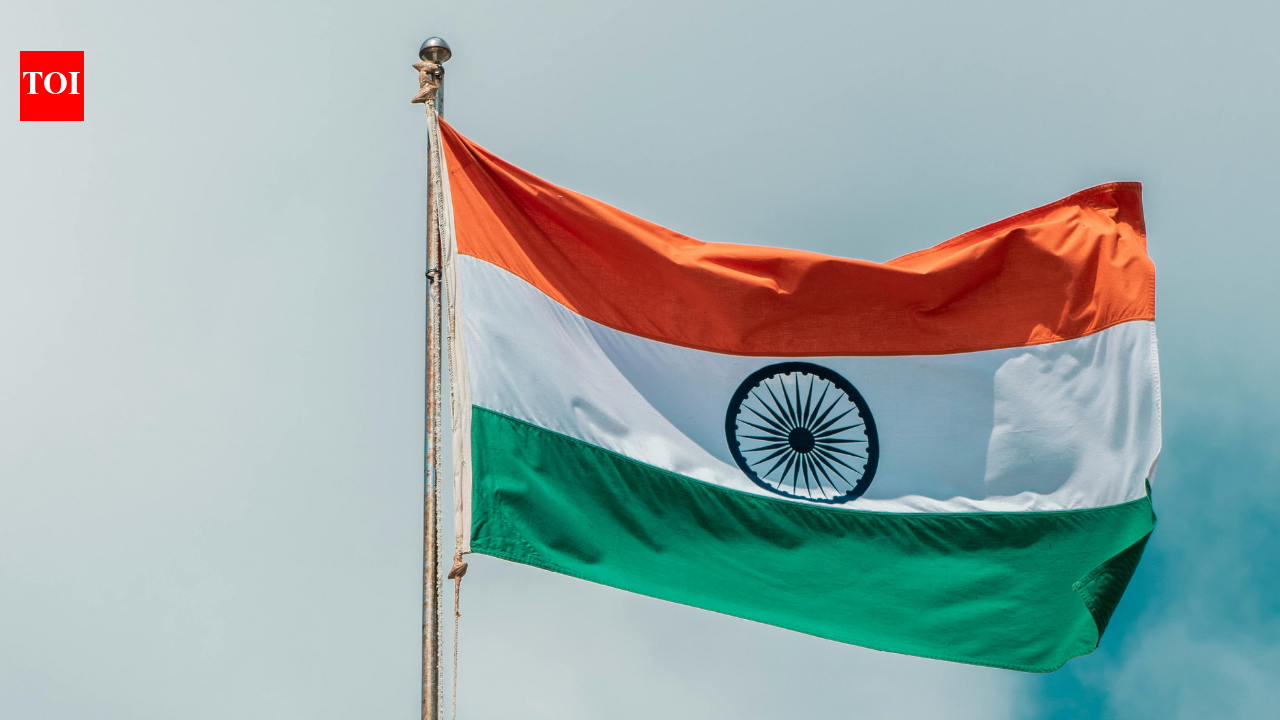
The Tricolour flag, or the Tiranga, is the national flag of India that represents Sacrifice, peace, and prosperity. The Indian Independence Gallery of the Fort St. George Museum in Chennai holds that piece of history that belongs to the entire nation.It is a 12-foot-long, 8-foot-wide flag of pure silk, the first that was ever hoisted in independent India on August 15, 1947, and the only one from that day to have survived to this day, according to a PIB report.Raised at the break of dawn, around 5:30 am, after the British Union Jack was lowered at Fort St. George, it witnessed the moment millions had waited for over generations.But the fluttering flag was not born overnight. A long story interwoven in decades of experimentation, protest, and evolving ideas about what a free India should look like is what makes the Tricolour look like its present design.Here is the story of the present-day Tricolour
It all began in 1906 when a flag first rose in Calcutta
The story of India’s flag does not begin in 1947. It starts in 1906 with the Calcutta Flag, raised during the Swadeshi and Boycott movement in Calcutta as an assertion of resistance against British rule. A year later, in 1907, Madam Bhikaji Cama unfurled a similar flag in Paris, carrying India’s demand for freedom onto an international stage for the first time.
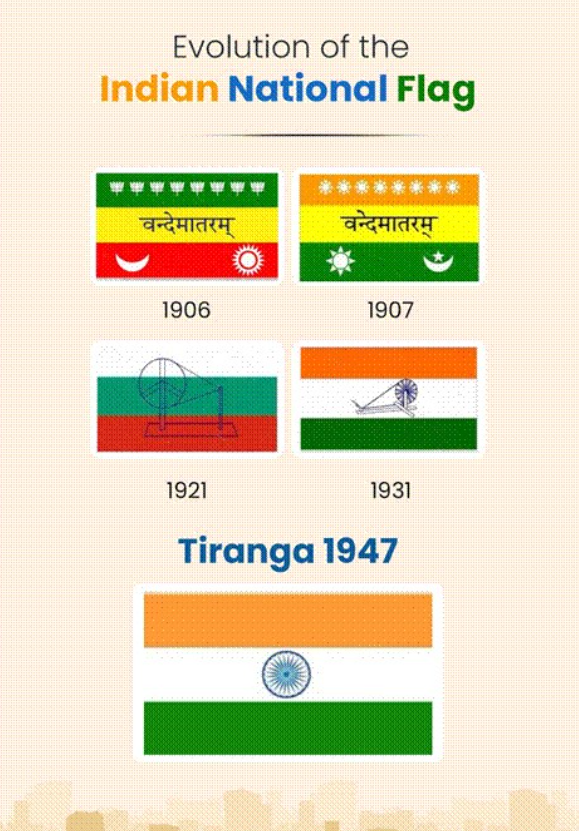
Photo via PIB
The next came in 1917 during the Home Rule movement
In 1917, during the Home Rule Movement led by Annie Besant and Bal Gangadhar Tilak, another version of the flag was raised, reflecting the growing demand for self-governance within the British Empire. It was only in 1921 that the flag began resembling the one we recognise today, when Pingali Venkayya designed a flag with stripes representing India’s communities and a spinning wheel at its centre, symbolising self-reliance.
The 1931 flag resembled the present Tricolour flag
The flag’s colours were finalised in 1931: saffron for courage, white for peace, and green for fertility and growth. The spinning wheel gave way to the Dharma Chakra, representing the eternal wheel of law and progress. This design was formally adopted by the Constituent Assembly on July 22, 1947, just weeks before independence, as the Tiranga that was hoisted across the country that August.
The Tricolour is now governed by the Flag Code of India
The Flag Code of India, 2002, governs how the Tiranga is displayed by citizens, institutions, and the government, ensuring it is always treated with dignity, never allowed to touch the ground, and disposed of respectfully when damaged. Whatever material the flag is composed of, be it hand-spun in khadi or machine-made, the flag carries the same significance.
Source link
Auto GoogleTranslater News